
The single best approach to matte paint protection is a matte-safe liquid sealant for everyday use, a matte-specific ceramic coating for longer-term defence, and matte paint protection film (PPF) on high-impact zones such as the bonnet and front bumper. None of these options add gloss. All three work by forming a sacrificial layer over the textured clear coat without filling or flattening it.
Start here today:
- Stop using any polish, paste wax, or gloss-enhancing product immediately.
- Wash with a pH-neutral, wax-free, silicone-free shampoo and the two-bucket method.
- Dry by blotting, never rubbing, with a plush microfibre towel.
- Apply a matte-safe spray sealant after each wash to maintain hydrophobic protection.
- Consider Diamondbrite’s Graphene Pro-Detailer as your go-to retail protectant, offering up to six months of protection per application.
Table of Contents
- Why matte paint behaves differently to gloss
- What you must never do with a matte finish
- How to wash your matte car safely, step by step
- Removing bird droppings, tar, and tree sap without damage
- Which protection option is right for your matte car?
- How to apply a matte sealant or ceramic coating yourself
- Maintenance schedule and what to do when things go wrong
- Your recommended starter kit for matte paint in the UK
- Key takeaways
- The reality of owning a matte-finish car
- Diamondbrite’s matte-safe range: where to start
- Useful sources for further reading
Why matte paint behaves differently to gloss
Matte and satin clear coats are engineered with a deliberately rough, microscopic surface texture. That texture scatters incoming light in multiple directions rather than reflecting it back as a single beam, which is precisely what creates the flat, non-reflective appearance. Land Rover’s own paint care guidance confirms that polishing or using abrasive products on this surface flattens the texture permanently, producing irreversible shiny patches that cannot be corrected without a full panel respray.
This is the fundamental difference from gloss paint, where light polishing removes minor scratches and restores clarity. On a matte finish, the same action destroys the finish. Paste waxes compound the problem because they contain filling agents designed to level micro-imperfections. On gloss paint, that is a benefit. On matte paint, those fillers settle into the texture’s peaks and troughs, smoothing them out and creating localised gloss spots.
Manufacturers from paint divisions emphasise that any protective product applied to matte paint must be sacrificial and non-filling. It should sit on top of the texture, not alter it.
Matte paint’s textured clear coat is its defining feature. Any product that fills, flattens, or smooths that texture changes the finish permanently. Protection must preserve the surface as it is, not improve upon it.
Pro Tip: If a contaminant lands on your matte finish, act within minutes rather than hours. Bird droppings and tree sap are acidic and begin etching the clear coat quickly. A prompt, gentle soak-and-lift is far safer than trying to correct damage later.
What you must never do with a matte finish
Getting the “don’ts” right matters more than almost anything else with matte paint, because most mistakes are permanent. Parkers’ guide to matte paint cleaning stresses that matte finishes are more susceptible to contaminants and that specialist matte-safe products are non-negotiable.
Absolute prohibitions:
- No machine or hand polishing, no cutting compounds, no abrasive pads.
- No paste waxes or carnauba waxes of any kind.
- No silicone-based products or gloss-enhancing additives.
- No automatic brush car washes, which apply rotary friction directly to the surface.
- No household detergents, washing-up liquid, or wax-containing shampoos.
- No rough cloths, sponges, or anything other than a soft microfibre mitt for contact washing.
Daily and weekly handling rules:
- Always rinse loose dirt before any contact with the paint.
- Dry with a blotting motion only; never drag a towel across the surface.
- Use dedicated matte microfibre towels, which have a deeper, softer pile than standard cloths.
A note on permanence: A single shiny patch caused by an abrasive product or an automatic car wash cannot be buffed out. The only repair is a panel respray, which in the UK typically runs to several hundred pounds per panel depending on the bodyshop and the vehicle. Prevention is the only realistic strategy.
How to wash your matte car safely, step by step
The correct routine follows a pre-wash, snow foam, two-bucket contact wash, rinse, and blot-dry sequence. CA Detailing’s guide to matte and satin finishes confirms this approach as the safest method for preserving texture while removing contamination effectively.
What you need before you start:
- Two wash buckets, each fitted with a grit guard
- A pH-neutral, wax-free, silicone-free matte shampoo
- A soft microfibre wash mitt
- A pressure washer or hose (low-to-medium pressure)
- Matte-safe snow foam and a foam lance
- Plush matte microfibre drying towels
Step-by-step wash process:
- Pre-rinse. Rinse the entire vehicle with low-pressure water to dislodge loose dirt and grit. Work top to bottom.
- Snow foam. Apply a matte-safe snow foam through a foam lance. Leave it to dwell for three to five minutes to loosen bonded contamination, then rinse thoroughly.
- Two-bucket wash. Fill one bucket with your matte shampoo solution and one with clean rinse water. Dip the mitt in the shampoo bucket, wash a panel, then rinse the mitt in the clean water bucket before reloading with shampoo. This keeps grit out of your wash solution.
- Contact wash. Work panel by panel from the roof downward using straight, overlapping strokes. Never use circular motions.
- Final rinse. Rinse each panel with low-pressure water immediately after washing it, again working top to bottom.
- Blot dry. Lay a plush matte microfibre towel flat against the panel and press gently. Lift and reposition rather than dragging. A second dry towel finishes any remaining moisture.
| Tool | Specification | Why it matters |
|---|---|---|
| Wash mitt | Soft microfibre, long pile | Lifts dirt away from surface without friction |
| Shampoo | pH-neutral, wax-free, silicone-free | Cleans without depositing gloss agents |
| Drying towel | Plush matte microfibre (800+ GSM) | Absorbs without dragging across texture |
| Buckets | Two, with grit guards | Prevents reintroducing grit to the paint |
| Pressure washer | Low-to-medium setting | Rinses without forcing water under seals |
Pro Tip: Keep your pressure washer nozzle at least 30 cm from the panel surface and use a fan-spray pattern rather than a jet. A concentrated jet at close range can lift the edges of any film or sealant layer.
Removing bird droppings, tar, and tree sap without damage
Act fast. Beyond Just Service’s matte paint care guide recommends chemical decontamination over any mechanical method, because chemical removers dissolve the contaminant rather than abrading it away. Rubbing, even with a soft cloth, risks micro-marring the texture.
Bird droppings:
- Soak a folded matte microfibre cloth in warm water and lay it flat over the dropping for two to three minutes.
- Lift the softened residue gently with the cloth; do not wipe.
- Follow with a matte-safe detailer spray to clean the area.
Tar and adhesive residue:
- Apply a dedicated tar dissolver (solvent-based, matte-compatible) to a microfibre cloth, not directly to the paint.
- Press and hold against the tar spot for 30–60 seconds to allow the solvent to work.
- Lift away without rubbing; repeat if necessary.
- Rinse the area with clean water and reapply your matte sealant to the treated spot.
Tree sap:
- Use an isopropyl alcohol (IPA) solution diluted to around 20–30% on a soft cloth.
- Dab and lift; do not scrub.
- Always test any solvent on a hidden area first, such as inside a door shut.
Safety note: Solvents can strip unprotected matte clear coats if left too long or used undiluted. Always test in an inconspicuous area, work quickly, and rinse thoroughly.
Which protection option is right for your matte car?
All three main options — matte spray sealants, matte ceramic coatings, and matte PPF — are valid. Your choice depends on how you use the car and how much maintenance time you are willing to commit. Clean Your Car’s matte paint care guide confirms that matte-specific ceramic coatings and synthetic sealants both preserve texture while delivering hydrophobic and UV protection without adding gloss.
Matte spray sealant
- Pros: Easy DIY application, widely available, affordable, no curing time.
- Cons: Needs regular reapplication; less durable than coatings.
Matte-specific ceramic coating
- Pros: Lasts a moderate period with strong hydrophobic effect; makes washing easier.
- Cons: Preparation is demanding; application errors are difficult to correct; professional application adds cost.
Matte PPF (paint protection film)
- Pros: Supreme Car Detailing notes that matte PPF provides the best defence against stone chips and physical impact; self-healing variants available.
- Cons: Highest upfront cost; professional installation only; edges can lift over time.
| Protection type | Best for | Durability | DIY ease | Finish effect | Typical cost band |
|---|---|---|---|---|---|
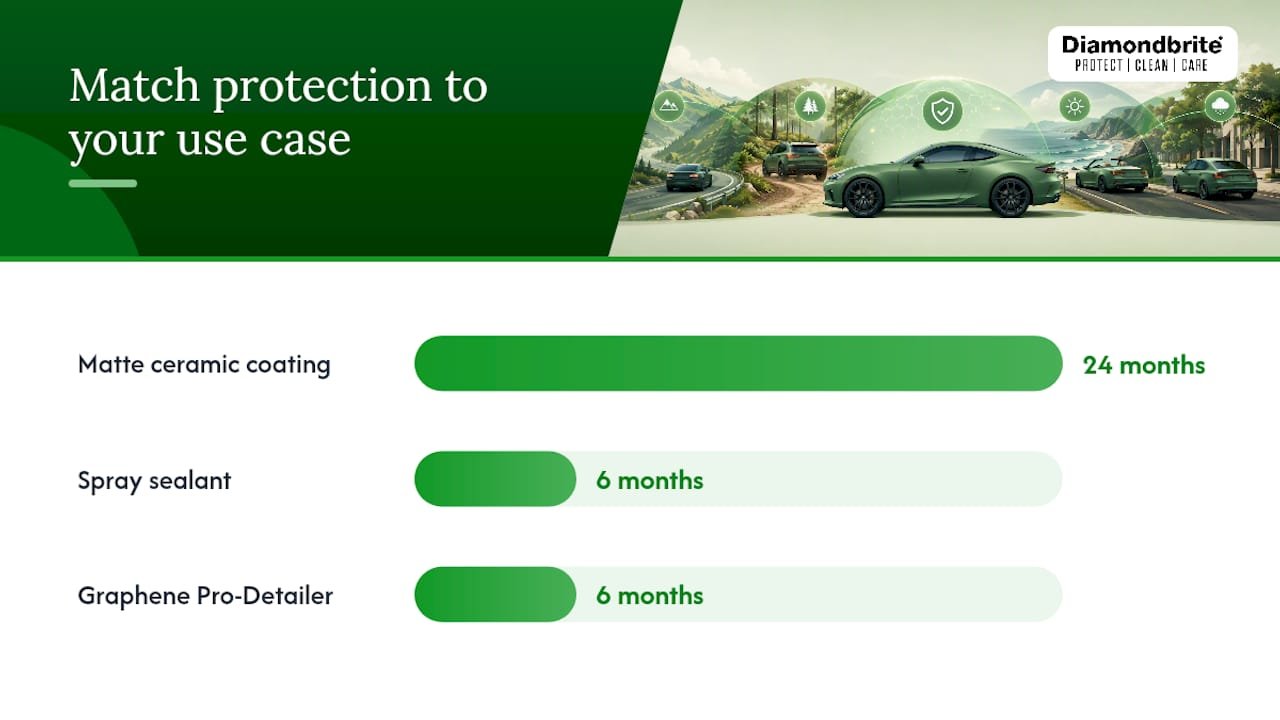
| Matte spray sealant | Daily commuter, frequent washer | up to six months | Easy | Keeps matte | Budget to mid |
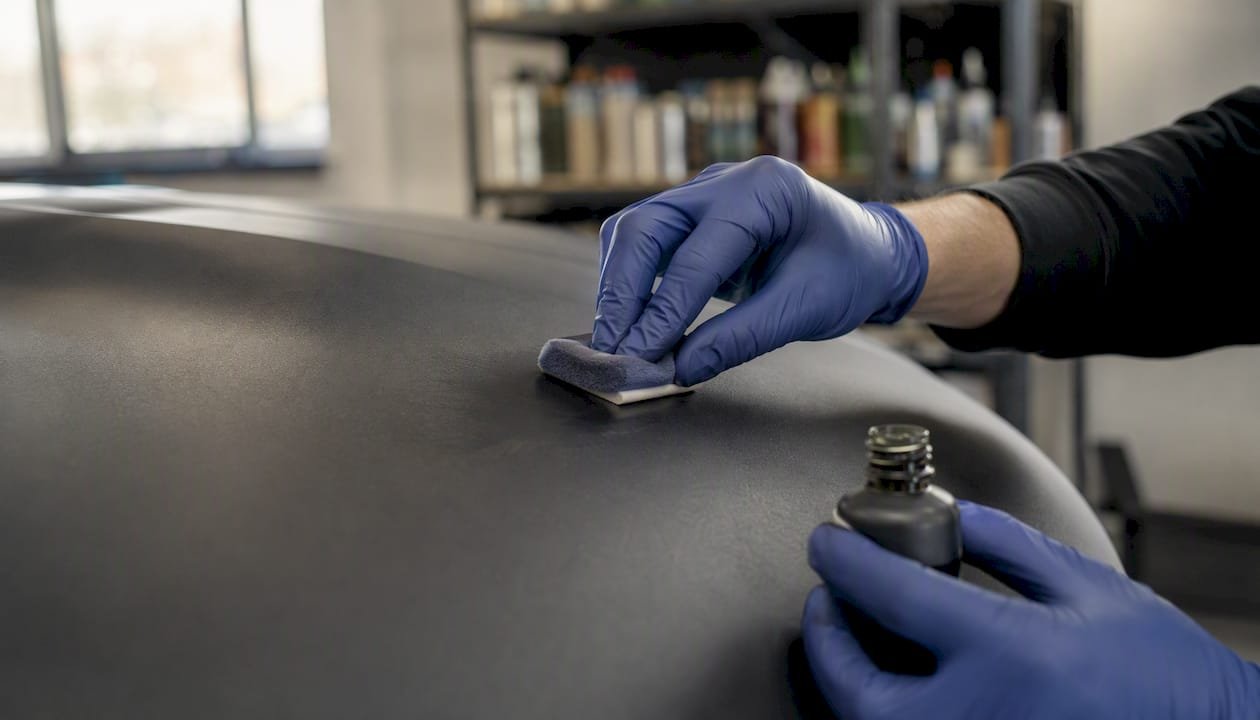
| DIY matte ceramic | Enthusiast, moderate mileage | 24 months | Moderate | Keeps matte | Mid |
| Professional matte ceramic | Show car, low mileage | 2+ years | Professional only | Keeps matte | Premium |
| Matte PPF | High-impact zones, motorway car | 5–10 years | Professional only | Keeps matte | Premium |
How to apply a matte sealant or ceramic coating yourself
Preparation is the critical step. A contaminated or oily surface will trap impurities under the coating and reduce adhesion. EuroLuxe Detailing’s guidance on matte finishes reinforces that pH-neutral, wax-free, silicone-free products must be used at every stage, including the prep wipe.
Applying a matte spray sealant:
- Wash and dry the vehicle fully using the routine above.
- Wipe each panel with a diluted IPA solution (20%) to remove any residual oils or silicones.
- Apply the sealant to a clean matte applicator pad in a thin, even layer.
- Work panel by panel; buff lightly with a clean matte microfibre towel before the product hazes.
- Allow 10–15 minutes before exposing the car to water.
Applying a DIY matte ceramic coating:
- Complete the full wash and IPA wipe-down.
- Work in a shaded, dust-free environment between 10°C and 25°C.
- Apply a few drops of coating to the supplied applicator block wrapped in a suede cloth.
- Spread in overlapping straight lines across a 40 cm x 40 cm section.
- Allow the product to flash (typically 1–3 minutes; check the manufacturer’s instructions).
- Level with a clean, dry matte microfibre towel using light pressure.
- Allow full cure before the car gets wet: typically 24–48 hours for initial cure, with full hardness reached after 7 days.
| Product class | Typical durability | Recoat interval |
|---|---|---|
| Matte spray sealant | up to six months | After protection degrades |
| DIY matte ceramic coating | 24 months | After full degradation |
| Professional matte ceramic coating | 2+ years | As advised by applicator |
| Matte PPF | 5–10 years | Film replacement |
Pro Tip: If the ambient temperature drops below 10°C or humidity rises above 70%, postpone ceramic coating application. Cold and damp conditions extend flash times unpredictably and can cause the coating to streak or cure unevenly. When in doubt, book a professional applicator.
Maintenance schedule and what to do when things go wrong
Specialists recommend washing every one to two weeks, spot-cleaning as needed, reapplying a spray sealant monthly, and performing a deeper chemical decontamination every three to six months depending on exposure. Clean Your Car’s matte care guide supports this cadence as the practical baseline for UK driving conditions.
Maintenance calendar:
- Weekly: Rinse or gentle hand wash; inspect for new contamination.
- Monthly: Full two-bucket wash; reapply matte spray sealant.
- Every 3–6 months: Chemical decontamination (iron remover, tar dissolver); inspect sealant or coating integrity.
- Annually: Full inspection of PPF edges and coating condition; consider professional reapplication if protection has degraded.
Recognising and addressing glossy patches:
- A glossy spot that appears after washing is usually caused by a wax or silicone residue from a contaminated cloth or the wrong product.
- Try a diluted IPA wipe on the affected area; this sometimes removes surface contamination without damaging the clear coat.
- If the gloss is caused by physical abrasion (flattened texture), no product will restore the matte appearance. A panel respray is the only fix.
Matte paint repairs in the UK are specialist work. Always inform your insurer that the vehicle has a matte or satin finish, as standard bodyshop respray processes and paints may not match the original texture. Specialist matte respray costs are typically higher than standard gloss repairs, and some insurers require an approved repairer.
For broader car care best practices that complement a matte maintenance routine, including seasonal checks and interior upkeep, CarJourney’s owner guides are a practical reference.
Your recommended starter kit for matte paint in the UK
You need five core items to begin safe matte maintenance. Here is what to buy first, with Diamondbrite’s Graphene Pro-Detailer as the recommended retail protectant, offering up to six months of protection per application.
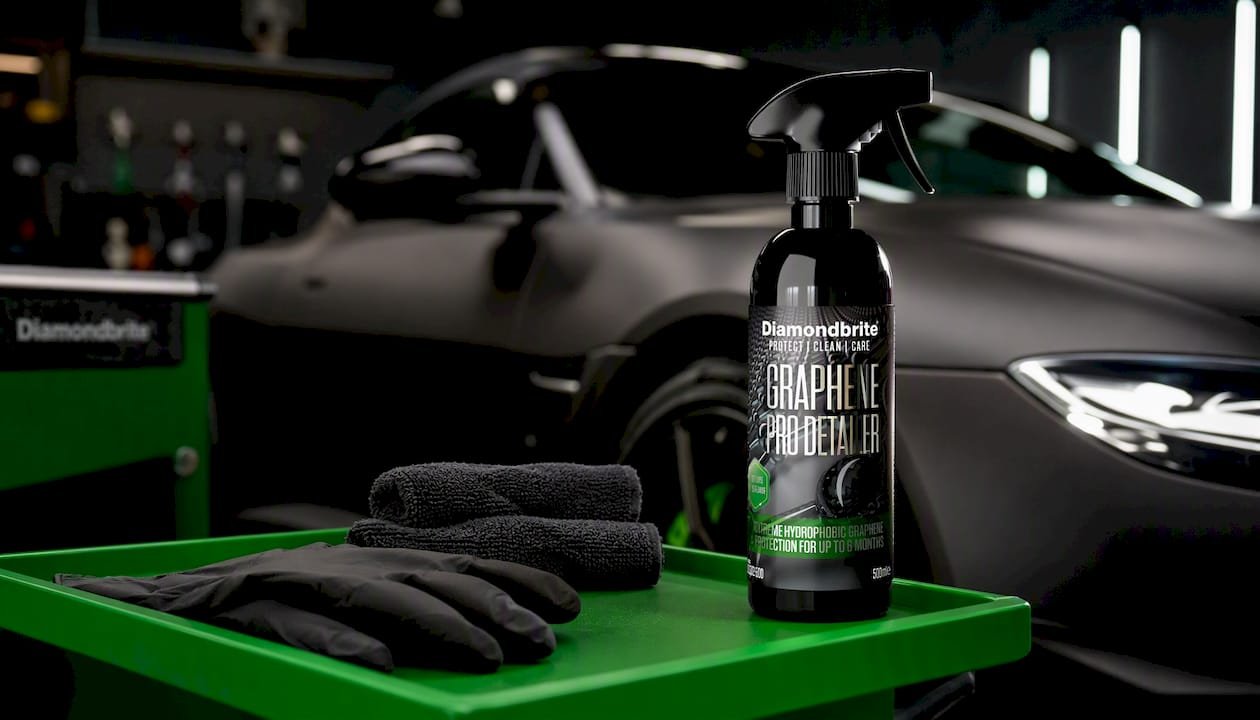
- Diamondbrite Graphene Pro-Detailer — a graphene-infused spray protectant formulated to deliver up to six months of hydrophobic protection without adding gloss. Apply after each wash or as a standalone top-up between washes. This sits firmly in the mid-to-premium tier and is the most cost-effective way to maintain consistent matte-safe protection between deeper treatments.
For ceramic coatings and PPF, professional installation is strongly recommended. Ask your chosen detailer specifically for a matte-certified product and confirm they have experience with non-gloss finishes before booking.
Pro Tip: Buy your matte shampoo and your sealant from the same product range where possible. Formulations within a single range are tested for compatibility, which reduces the risk of one product undermining the other’s performance.
Key takeaways
Matte paint protection depends entirely on using non-filling, non-gloss products at every stage — from the shampoo you choose to the sealant or coating you apply.
| Point | Details |
|---|---|
| Never polish matte paint | Polishing flattens the textured clear coat permanently, creating shiny patches that only a respray can fix. |
| Use matte-specific products only | pH-neutral, wax-free, silicone-free formulas at every stage protect texture without depositing gloss agents. |
| Spot-clean contaminants immediately | Bird droppings and tree sap etch matte clear coats quickly; soak and lift within minutes, never rub. |
| Match protection to your use case | Spray sealants suit frequent washers with up to six months of durability; matte ceramic coatings last 24 months; matte PPF is best for high-impact zones. |
| Diamondbrite Graphene Pro-Detailer | Graphene-infused, matte-safe protectant offering up to six months of hydrophobic protection per application. |
The reality of owning a matte-finish car
Matte paint divides opinion in the detailing world, and not always fairly. The conventional wisdom is that matte cars are a maintenance nightmare. The reality is more nuanced: they require a different routine, not necessarily a longer one.
What catches owners out is not the washing itself but the product selection. The average supermarket car care aisle is almost entirely designed for gloss paint. Picking up the wrong shampoo or, worse, a spray wax “for all finishes” can create a glossy patch in minutes. That single mistake is what gives matte paint its difficult reputation.
The trade-off is real, though. You cannot correct minor swirl marks or light scratches the way you can on gloss paint. Prevention is the entire game. A consistent routine using the right products, combined with a quality matte-safe protectant applied regularly, means most owners spend no more time on maintenance than they would with a standard gloss car. The key is building the habit early, before a contaminant or a wrong product forces a costly repair.
For owners of classic or long-term keeper vehicles, the same discipline applies. Maintaining a car’s finish over many years is always about consistent, gentle care rather than periodic correction.
Diamondbrite’s matte-safe range: where to start
Matte paint owners who want reliable, tested protection without the guesswork of mixing products from different brands will find Diamondbrite’s range a practical starting point. The Graphene Pro-Detailer is the centrepiece: a graphene-infused spray protectant that builds a durable hydrophobic shield over your matte clear coat without adding any gloss. Up to six months of protection per application makes it one of the most cost-effective options in the mid-to-premium tier for UK owners.
The formulation is wax-free and silicone-free, which means it meets the core requirements for safe use on matte and satin finishes. Apply it after your regular wash as a spray-and-wipe protectant, or use it as a standalone top-up between full washes. The full Diamondbrite range, including matte-compatible shampoos and detailing products, is available through the Diamondbrite online shop. For ceramic coatings and PPF, contact a Diamondbrite-approved professional installer who can confirm matte-certified product compatibility before application.
Useful sources for further reading
These resources are worth bookmarking if you want to read original manufacturer guidance or go deeper on specific topics:
- Caring for your paint
- How to clean matte paint
- The ultimate guide to matte paint care: how to wash, protect & maintain your finish
- Matte paint protection: How to protect frozen and satin finishes – Supreme Car Detailing
- Guide to maintain matt and satin car finishes
- How to care for matte car paint (Do’s, Don’ts & Expert Tips) – Beyond Just Service
- Matte paint ceramic coating
- How to protect matte and satin paint finishes | EuroLuxe Detailing
These sources summarise the practical steps covered in this guide. Always cross-reference manufacturer care notes for your specific vehicle, as some OEM matte finishes carry their own product restrictions.