

Matte-specific ceramic coatings are safe, effective, and genuinely worth applying to matte and satin finishes — provided you choose a formulation that explicitly preserves the non-reflective surface. For most UK owners, the practical starting point is a matte-safe spray sealant or detailer coating for routine maintenance, stepping up to a professional multi-layer ceramic system for long-term protection. Here is what to consider before you buy:
- Matte coatings do exist as dedicated SiO2-based formulations that bond without adding gloss, protecting against UV, chemical etching, and road grime.
- Coating alone is enough for urban drivers with low stone-chip exposure; add matte Paint Protection Film (PPF) on the bonnet and leading edges if you regularly cover motorway miles.
- Diamondbrite’s Ceramic Glaze is a UK-made option that fits neatly into both a DIY maintenance routine and a professional detailer’s workflow.
Table of Contents
- Why matte and satin paint behaves differently from gloss
- What a matte-specific ceramic coating actually protects against
- How to choose a matte-safe ceramic coating
- Surface preparation and the limits of defect correction
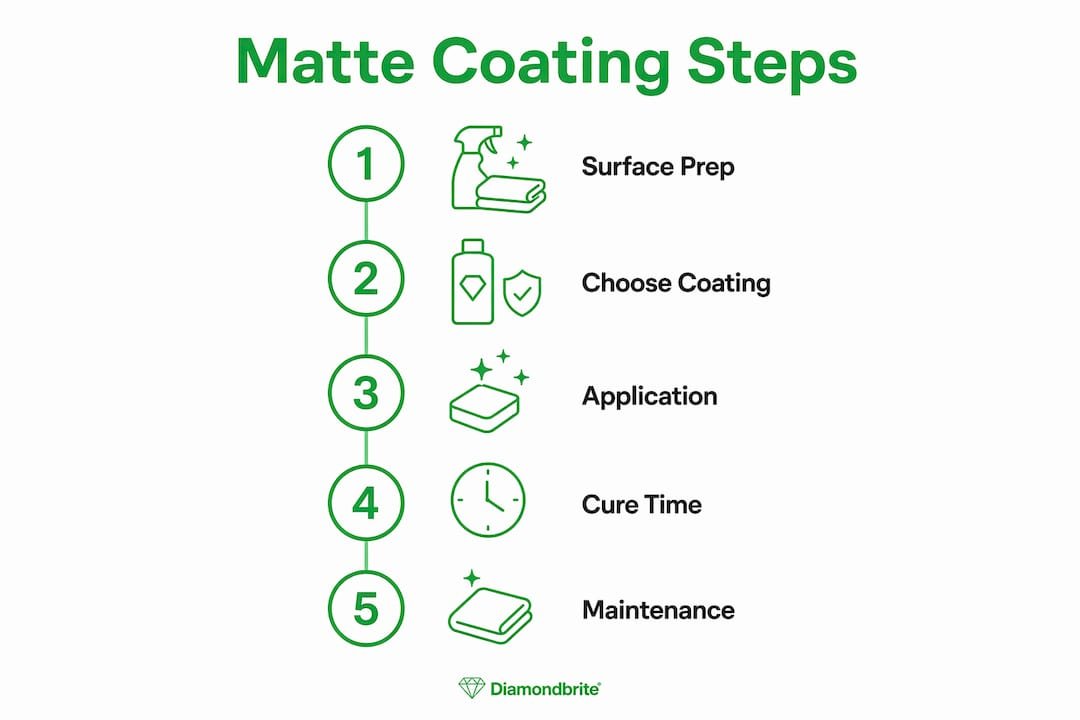
- How to apply a matte ceramic coating step by step
- How to clean and maintain a matte-coated car
- Common risks and limitations you need to accept
- When to use PPF together with a matte ceramic coating
- What longevity and cost to expect from matte ceramic coatings
- When to DIY and when to call a professional
- Key takeaways
- The case for getting matte protection right from the start
- Diamondbrite’s ceramic care for matte and satin finishes
- Useful sources and further reading
Why matte and satin paint behaves differently from gloss
Matte paint gets its distinctive flat appearance from a textured clear coat containing matting agents. Under a microscope, the surface appears rough and irregular, scattering light in multiple directions rather than reflecting it cleanly. That micro-texture is the finish. Anything that flattens the peaks or fills the valleys — abrasive polish, hard paste wax, a gloss-enhancing product — will produce shiny spots, often permanently.
This is the fundamental difference from gloss paint, where light scratches can be polished out and wax fills minor imperfections invisibly. On matte, the clear coat emphasises imperfections and cannot be restored by polishing without creating gloss. The practical consequence: your product choices are narrower, and mistakes are harder to reverse.
Pro Tip: Bird droppings, tree sap, and tar etch into matte clear coat faster than gloss because the porous texture holds contaminants against the surface. Remove them within hours, not days.
What a matte-specific ceramic coating actually protects against
A properly formulated matte ceramic coating builds a durable, chemically resistant layer over the textured clear coat without altering its appearance. The protection it delivers is real and measurable:
- Hydrophobicity: Water beads and rolls off, carrying road film and grime with it. This reduces the frequency of contact washing, which is the main source of damage on matte finishes.
- Chemical resistance: The coating acts as a barrier against bird droppings, acidic fallout, bug splatter, and road tar, giving you more time to remove contaminants safely before they etch the clear coat.
- UV protection: Prolonged sun exposure fades pigment and degrades clear coats. A matte-safe SiO2 formulation provides UV inhibitors that slow this process without adding reflectivity.
- Easier maintenance: A coated surface is significantly simpler to clean. Dirt bonds less aggressively, so a gentle hand wash is usually sufficient.
What coatings cannot do is equally worth knowing. They do not prevent stone chips or deep scratches, they do not restore etched or polished matte clear coat, and they do not eliminate the need for prompt spot cleaning when contaminants land.
Longevity vs. waxing: Traditional carnauba waxes typically last weeks to a few months on any finish. Professional-grade ceramic coatings are rated for multiple years of protection, making them a considerably more durable investment for matte paint that cannot be corrected between applications.
How to choose a matte-safe ceramic coating
The label is your first filter. Look for explicit wording such as “matte formulation,” “no gloss enhancement,” or “matting agents preserved.” A matte clear coat contains matting agents that create the micro-texture responsible for the flat look; the coating must bond without filling those textures, which is why specialised matte chemistries avoid glossing polymers and heavy fillers.
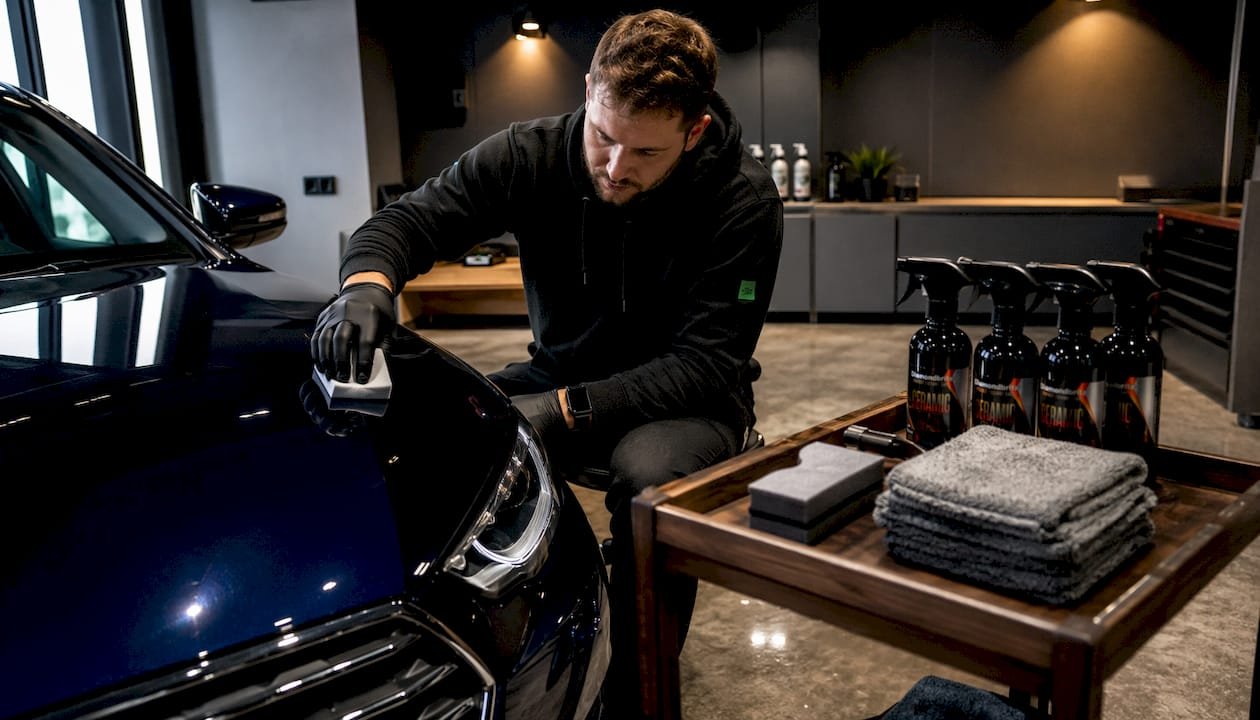
Red flags to avoid: any product listing “gloss booster,” “shine enhancer,” carnauba wax, or glazing compounds. These will alter the finish.
| Dimension | What to check |
|---|---|
| Matte/satin suitability | Explicit “matte-safe” or “no gloss” claim on label |
| Claimed durability | Spray sealants: 6–12 months; professional coatings: 1–7+ years |
| Effect on finish | Confirms no change to reflectivity or sheen level |
| Maintenance frequency | Manufacturer’s recommended top-up interval (often 6–12 months) |
| Application difficulty | DIY spray vs. professional multi-layer system |
| Typical cost | DIY kits: lower upfront; professional systems: higher but longer-lived |
Before purchasing, check batch size, required cure temperature, and whether a panel wipe or primer step is specified. Skipping these details is the most common cause of poor results.
Surface preparation and the limits of defect correction
Correct preparation is where most DIY matte coating projects succeed or fail. The sequence matters:
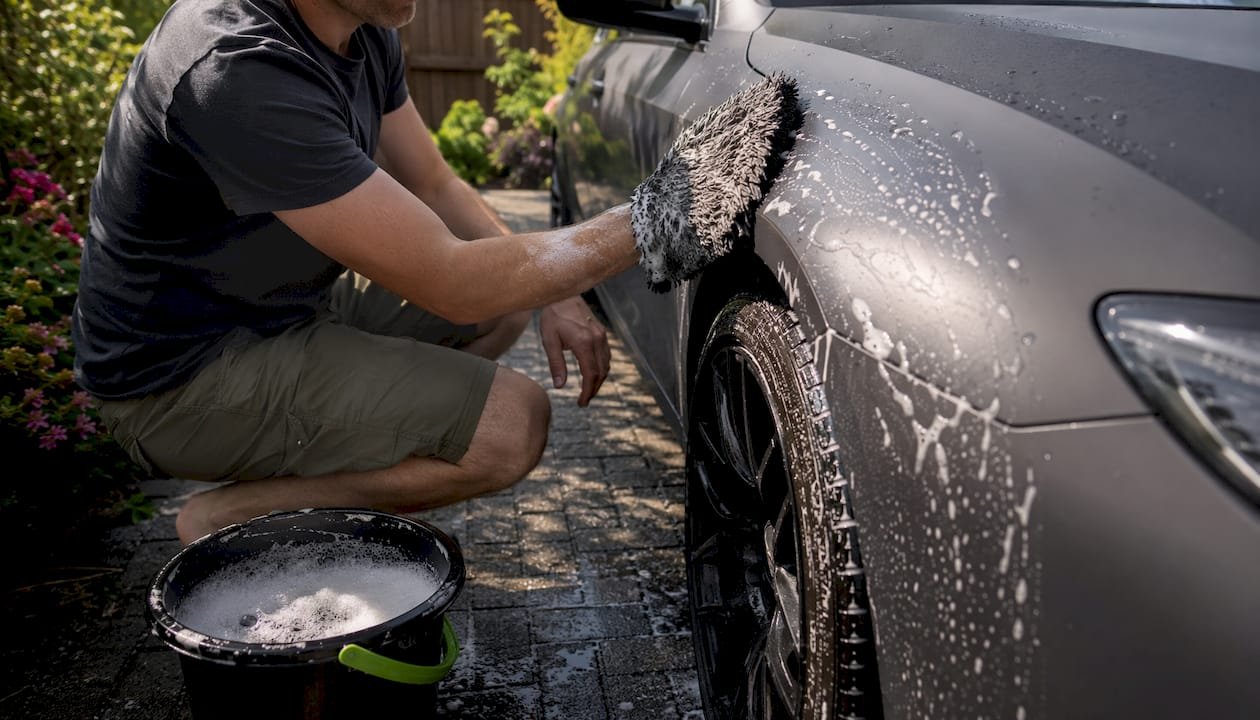
- Pre-wash generously using a pH-neutral snow foam and a pressure rinse to lift loose contamination before any contact with the surface.
- Decontaminate with a clay bar or iron fallout remover rated safe for matte finishes to remove bonded particles the wash cannot shift.
- Panel wipe with a matte-compatible cleaner to remove any remaining oils or residues before coating.
- Work in a dust-free environment — a garage with doors closed is the minimum standard for a DIY application.
The correction limit is firm: machine polishing and abrasive compounds are contraindicated on matte paint. They even out the micro-texture and produce glossy spots that are often permanent. If the surface already has shiny patches or severe etching, a professional evaluation is the right next step. In many cases, repainting the affected panel is the only true fix.
Pro Tip: Test any new cleaner or decontamination product on a small, inconspicuous area first. Matte finishes vary by manufacturer, and what is safe on one car may not be safe on another.
How to apply a matte ceramic coating step by step
Professional application is the safer choice for a full-vehicle, long-life coating. DIY matte spray sealants and detailer coatings are valid for maintenance top-ups or budget-conscious owners who have already done the prep work carefully.
Application workflow:
- Pre-wash and decontaminate (see preparation section above).
- Spot-check the surface in good lighting for any existing shiny spots or etching.
- Mask rubber trim, plastic panels, and glass edges to avoid staining.
- Apply the coating with a microfibre applicator labelled for matte use, working one panel at a time.
- Allow the product to flash (go slightly tacky) per the manufacturer’s timing.
- Buff with a clean, lint-free microfibre towel using light pressure.
- Conduct a post-application inspection and apply a second pass if the manufacturer specifies it.
Tools you need: matte-rated microfibre applicators, lint-free buffing towels, dedicated matte panel wipes, nitrile gloves, and adequate ventilation.
| Product type | Typical cure window | Wait between coats |
|---|---|---|
| Spray sealant | 1–4 hours | N/A (single layer) |
| Entry professional coating | 12 hours | 2–4 hours |
| Multi-layer professional system | — | Per manufacturer spec |
Real-world note: Professional multi-layer ceramic systems typically require 1–3 days of prep and application time, factoring in surface correction assessment and staged curing.
Pro Tip: Always check the manufacturer’s temperature and humidity guidance. Applying a coating below 10°C or in high humidity significantly reduces film formation and long-term durability.
How to clean and maintain a matte-coated car
Maintenance is where matte ownership either stays enjoyable or becomes frustrating. The rules are straightforward once you know them.
Do:
- Hand wash using a matte-safe, pH-neutral shampoo and the two-bucket method.
- Use soft microfibre wash mitts and rinse them frequently.
- Apply a matte-specific quick detailer spray between washes to refresh hydrophobicity.
- Remove bird droppings, sap, and tar immediately with a matte-safe spot cleaner, lifting rather than rubbing.
- Schedule a maintenance sealant top-up every 6–12 months, or per your product’s guidance.
Do not:
- Use automatic brush car washes — abrasive brushes and harsh chemicals create shiny wear spots and strip protection.
- Apply waxes, polishing compounds, glazes, or any product with silicone sheen additives.
- Scrub contaminants vigorously; always lift them gently with a damp, soft cloth.
Pro Tip: Keep a small matte care kit in the garage: a pH-neutral matte shampoo, a fine-microfibre set, and a matte-safe spray sealant. Having the right products to hand means you are never tempted to reach for the wrong one.
Common risks and limitations you need to accept
Matte paint is rewarding to own, but it comes with genuine trade-offs that no coating fully eliminates.
- Permanent shiny spots are the most common and costly mistake. Polishing, using gloss products, or even aggressive rubbing can alter the micro-texture irreversibly. Repainting the panel is often the only remedy.
- Contaminant etching from bird droppings, tree sap, and road tar can penetrate the matte clear coat if left in place, requiring full-panel repainting in severe cases.
- Physical damage — stone chips and deep scratches — is not prevented by ceramic coatings. The coating reduces chemical attack and eases cleaning; it does not act as armour against road debris.
- Improper application shortens coating life and can change the finish appearance. Insufficient prep, wrong cure temperature, or using a non-matte formulation are the most common errors.
When to use PPF together with a matte ceramic coating
Paint Protection Film and a matte ceramic coating serve different purposes, and combining them on high-impact zones is often the most pragmatic approach for motorway drivers or anyone regularly exposed to stone chips.
- PPF provides physical protection against chips and abrasion that coatings cannot reliably stop.
- Matte ceramic coating provides hydrophobicity, chemical resistance, and UV protection across the whole vehicle.
- Suggested sequence: install matte or satin-finish PPF on the bonnet, front bumper, and leading edges first, then apply a matte-safe ceramic coating across the entire car.
When to skip PPF: if you drive mainly in urban environments at lower speeds, the chip risk is lower and a coating alone may be sufficient. The cost and complexity of PPF installation may not be justified.
Pro Tip: If you are using PPF, confirm the film itself carries a matte or satin finish. A gloss PPF on a matte car creates an obvious finish mismatch that defeats the purpose entirely.
What longevity and cost to expect from matte ceramic coatings
Realistic expectations help you choose the right product and budget appropriately.
Longevity bands: Spray sealants typically last 6–12 months. Entry-level professional ceramic coatings are rated for 1–3 years. Long-life professional systems can reach 3–7+ years with correct maintenance.
- DIY spray/detailer packs carry a lower upfront cost and suit owners comfortable with careful prep and application.
- Professional multi-layer ceramic systems cost more but deliver longer effective protection, often with a warranty where the applicator provides one.
- Time investment: a DIY application on a prepared car might take a full day; professional prep plus application typically runs 1–3 days depending on the correction assessment required.
- Ongoing costs: factor in periodic sealant top-ups, specialist matte cleaning products, and occasional professional inspections to maintain the coating’s performance.
When to DIY and when to call a professional
For most UK owners, a matte-safe spray sealant handles routine maintenance between professional treatments. Book a professional multi-layer coating when the car has visible defects that need assessing, when you want the longest possible protection life, or when the vehicle is high-value and the stakes of an application error are significant.
If the car is already showing shiny spots or etching, a professional evaluation comes first — no coating will fix existing damage.
Diamondbrite’s Ceramic Glaze is a UK-made ceramic detailing product that works as a maintenance glaze in both DIY and professional workflows. Read the product’s application and cure guidance before use, and always conduct a small test area on a matte finish before full application.
Pro Tip: For a first-time matte coating, buy a small kit and test it on a single panel before committing to the whole car. This confirms compatibility with your specific finish and builds confidence in the process.
Key takeaways
A matte-specific ceramic coating is the single most effective way to protect a matte or satin finish long-term, provided the formulation explicitly avoids gloss-enhancing agents and the surface is correctly prepared beforehand.
| Point | Details |
|---|---|
| Choose matte-specific formulations | Only use products that explicitly state “no gloss enhancement” or “matte-safe” on the label. |
| Preparation is non-negotiable | Improper prep is the most common cause of shortened coating life and unwanted gloss changes. |
| Avoid polishing and gloss products | Machine polishing creates permanent shiny spots on matte clear coat that often require repainting. |
| Combine PPF for physical protection | Apply matte PPF on high-impact zones first, then coat the whole car for chemical and UV resistance. |
| Diamondbrite Ceramic Glaze | A UK-made ceramic detailing option suited to both DIY maintenance and professional matte care workflows. |
The case for getting matte protection right from the start
Matte paint divides opinion, but one thing is clear: the owners who struggle with it are almost always the ones who underestimated the product discipline it requires. The finish is not fragile — it is simply unforgiving of the wrong products. A gloss car can recover from a misapplied wax. A matte car often cannot.
What I find genuinely encouraging is how far matte-specific chemistry has come. SiO2-based coatings that bond without altering the micro-texture are a real solution, not a workaround. The protection they offer — hydrophobicity, chemical resistance, and UV defence — is the same class of performance that gloss car owners get from premium coatings. The difference is that matte owners have fewer options and less margin for error, which makes choosing a trusted, purpose-built product more important, not less.
Diamondbrite has been developing formulations in its Loughborough lab since 1991, and that depth of British chemistry experience matters when the finish you are protecting cannot be corrected if something goes wrong. Start with a test panel, follow the manufacturer’s cure guidance, and do not rush the prep. The finish will reward the care.
Diamondbrite’s ceramic care for matte and satin finishes
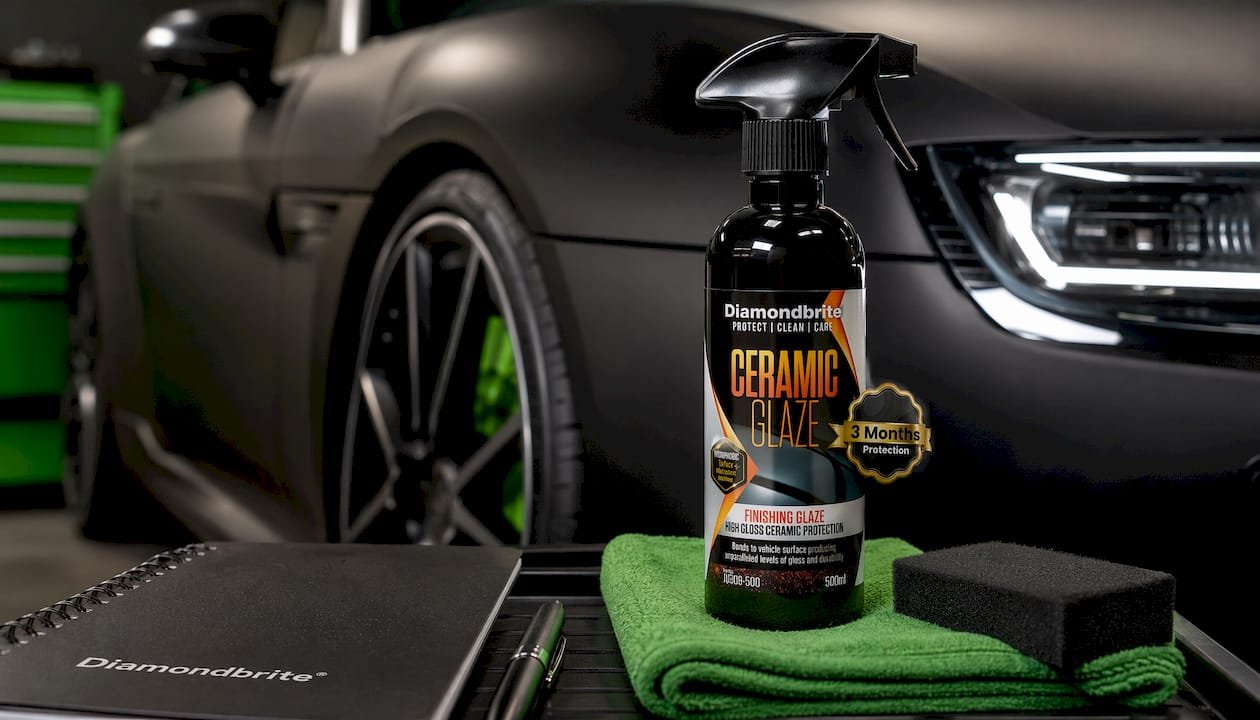
Protecting a matte finish does not have to mean expensive professional visits every few months. Diamondbrite’s Ceramic Glaze is a UK-formulated ceramic detailing product that gives you a practical, cost-effective way to maintain ceramic protection between professional treatments, without reaching for the wrong product and risking your finish. It is made in Britain, developed in Diamondbrite’s own Loughborough lab, and trusted across more than two million vehicles. Read the application and cure guidance on the product page, pick up a small kit for a test panel, and build your matte care routine from there. For full-vehicle professional application, consult a certified detailer who can assess your specific finish before committing to a multi-layer system.
Useful sources and further reading
| Source | Why it is useful |
|---|---|
| Auto Express: matte car paint guide | Clear, UK-focused explainer on matte paint care and recommended product types from an established automotive publication. |
| HowStuffWorks: matte finish maintenance | Explains the clear coat construction and why matte-specific products are required for safe maintenance. |
| Kelley Blue Book: matte paint pros and cons | Covers correction limits and why polishing is contraindicated; useful background for understanding irreversible damage. |
| Car Detailing Planet: matte paint pros and cons | Practical breakdown of contaminant risks and the repair limits that make fast decontamination critical. |
| Supreme Car Detailing: matte paint protection | UK detailer’s guide to combining PPF and ceramic coatings on matte finishes; useful for understanding sequencing. |
| The Autopian: matte paint realities | Honest account of automatic car wash risks and the practical discipline matte ownership demands. |
| Diamondbrite Ceramic Glaze | UK-made ceramic detailing product with application and cure guidance; primary purchase link for matte-compatible ceramic maintenance. |